Creator marketing has become an important growth channel for ecommerce brands. Instead of relying entirely on paid advertising, brands can work with creators to introduce products to highly engaged audiences and build trust through authentic content.
But finding the right creators, managing conversations, tracking campaigns, and measuring results can quickly become difficult when handled manually. This is where creator outreach tools can help.
The right platform can make it easier to discover relevant creators, organize outreach, manage partnerships, and measure campaign performance. However, the best tool depends on the brand's goals, target market, campaign size, and overall ecommerce strategy.
What Are Creator Outreach Tools?
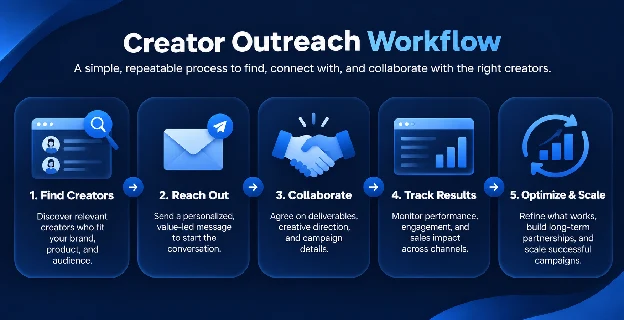
Creator outreach tools help brands and agencies manage relationships with influencers and content creators.
Depending on the platform, they may provide features such as:
- Creator discovery and search
- Audience and engagement analysis
- Contact and outreach management
- Campaign management
- Content tracking
- Performance reporting
- Influencer relationship management
- Payment and collaboration management
For smaller brands, these tools can reduce the amount of time spent searching for creators and managing communications. For agencies, they can provide a more organized way to manage multiple clients and campaigns simultaneously.
Why Creator Outreach Matters for Ecommerce Brands
Creator partnerships can be especially valuable for ecommerce because they can connect products with audiences that already have an interest in a particular niche.
A creator recommending a product can provide social proof while also generating traffic to an ecommerce store or marketplace listing.
Creator campaigns can help brands:
- Increase product awareness
- Reach niche audiences
- Generate user-generated content
- Build social proof
- Drive traffic to product pages
- Support product launches
- Test messaging with different audiences
- Expand into new markets
However, creator marketing should not operate in isolation. Sending more traffic to a poorly optimized product page will not necessarily produce more sales.
Brands need to think about the entire customer journey, from creator discovery and content creation to product positioning, conversion, fulfillment, and retention.
What to Look for in a Creator Outreach Tool
Not every creator outreach platform offers the same features. Before choosing one, brands and agencies should consider what they actually need.
Creator Discovery
A strong search function should make it easy to identify creators based on factors such as niche, location, audience demographics, platform, engagement, and follower size.
Follower count alone should not determine whether a creator is a good fit. A smaller creator with a highly relevant audience can sometimes generate better results than a large creator with a broad but less relevant following.
Audience and Engagement Data
Reliable audience information can help brands evaluate whether a creator's followers match their target customers.
Look for tools that provide useful metrics around engagement, audience demographics, growth, and authenticity.
Outreach Management
Managing creator conversations through spreadsheets, email, and direct messages can become difficult as campaigns grow.
A centralized outreach system can help teams keep track of who has been contacted, who has responded, who is interested, and where each partnership stands.
Campaign Management
For larger campaigns, it is useful to have a single place to manage creators, deliverables, deadlines, content, and campaign status.
This becomes particularly important for agencies managing multiple brands.
Reporting
The ability to measure campaign performance is essential.
Depending on the campaign, brands may want to track metrics such as:
- Reach and impressions
- Engagement
- Clicks
- Website traffic
- Conversions
- Revenue
- Cost per acquisition
- Return on investment
The more closely creator activity can be connected to business outcomes, the easier it becomes to determine which partnerships are worth continuing.
Best Creator Outreach Tools for Brands and Agencies
There are several established platforms that can help brands and agencies manage creator partnerships.
Hubfluence
Hubfluence is particularly focused on TikTok Shop creator and affiliate management. Its platform combines creator discovery, outreach, sample management, affiliate CRM, and performance analytics in one workspace.
The platform provides access to a database of more than 4 million TikTok Shop creators and allows brands to filter creators using factors such as GMV, followers, engagement, location, audience information, and other criteria. It also offers AI Creator Search and creator lookalike functionality for finding potential partners based on successful existing creators.
For outreach, Hubfluence supports multi-step TikTok DM and email sequences with automated follow-ups. Conversations can also be managed through a centralized inbox, helping teams keep creator communications organized as campaigns scale.
Another useful area is performance measurement. Brands can track creator and video performance and connect activity to GMV, orders, and other ecommerce outcomes. Hubfluence also offers multi-shop management for agencies and teams managing multiple TikTok Shop accounts.
Hubfluence is an official TikTok Shop Partner, with its integration designed to work through TikTok's official authorization and Affiliate Manager infrastructure.
This makes it a particularly relevant option for brands and agencies whose creator strategy is heavily centered on TikTok Shop.
HypeAuditor
HypeAuditor is known for its influencer discovery and audience analytics capabilities. Brands can use the platform to research creators and evaluate audience quality, engagement, demographics, and other performance indicators.
It can be useful for brands that want more data before deciding which creators to approach.
Modash
Modash focuses on influencer discovery, audience insights, and campaign tracking. Its search capabilities can help brands identify creators across major social platforms and evaluate potential partnerships.
It can be particularly useful for teams that want to build creator lists based on specific audience and performance criteria.
GRIN
GRIN is designed around creator relationship management and influencer marketing operations. It offers tools for discovering creators, managing campaigns, handling relationships, and measuring results.
Its broader campaign management capabilities make it more suited to brands running structured creator programs rather than occasional one-off collaborations.
Upfluence
Upfluence combines influencer discovery, campaign management, and ecommerce-focused features.
The platform can be useful for brands that want to connect influencer campaigns with their broader ecommerce activities and track the impact of creator partnerships.
Aspire
Aspire provides tools for influencer discovery, relationship management, campaign workflows, and content collaboration.
It can be useful for brands and agencies managing a larger number of creator relationships and wanting to streamline campaign processes.
CreatorIQ
CreatorIQ is geared toward larger brands and enterprise-level influencer marketing programs.
It focuses heavily on campaign management, creator relationships, analytics, and reporting, making it more suitable for organizations with complex influencer programs.
Traackr
Traackr focuses on influencer relationship management and analytics. It can help brands organize creator partnerships and evaluate campaign performance over time.
Its emphasis on measurement can be useful for companies looking to make creator marketing a more structured part of their marketing strategy.
impact.com
impact.com provides partnership management capabilities that extend beyond traditional influencer marketing. Brands can use it to manage different types of partnerships and track performance across channels.
This can be useful for companies that want to bring creator, affiliate, and other partnership activities into a more unified system.
How to Choose the Right Tool
The most expensive platform is not necessarily the best choice.
A small ecommerce brand may only need creator discovery and basic outreach management, while an agency managing several clients may require advanced campaign workflows, reporting, and relationship management.
Consider these questions before choosing a platform:
How many creators will you manage?
If you only work with a handful of creators each month, a complex enterprise platform may be unnecessary.
Which social platforms matter most?
Make sure the tool supports the platforms where your target customers and creators are actually active.
How important is analytics?
If measuring revenue and conversions is a priority, prioritize platforms with strong reporting and attribution capabilities.
Do you need ecommerce integrations?
Brands selling through Shopify, Amazon, or other marketplaces should consider whether the platform can fit into their existing ecommerce technology stack.
Will your needs change as you grow?
A tool that works for ten creator partnerships may become inefficient once you are managing hundreds. Consider whether the platform can scale with your business.
How Brands Can Turn Creator Partnerships Into Ecommerce Growth
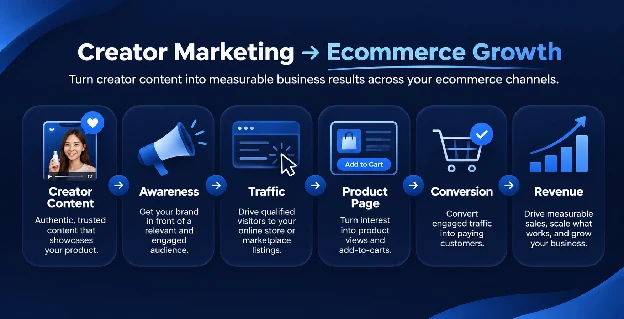
Finding creators is only the beginning.
The real value comes from connecting creator activity to the rest of the ecommerce funnel.
For example, a brand launching a new product could work with creators to generate awareness and product content. That content could then support social media campaigns, paid advertising, product pages, and marketplace listings.
Creator-generated content can also provide valuable insight into how customers respond to different product benefits and messaging.
Instead of treating every creator campaign as a standalone marketing activity, brands can use the content and traffic generated by creators across multiple parts of the business.
This approach can make creator marketing more valuable over the long term.
Connecting Creator Marketing With Marketplace Growth
For ecommerce brands selling on marketplaces, creator marketing can be especially powerful when it is connected to a broader marketplace strategy.
A creator may generate interest in a product, but the customer still needs to find a compelling product listing, understand the value proposition, and feel confident enough to purchase.
That means brands should also consider areas such as:
- Marketplace listing optimization
- Product positioning
- Advertising strategy
- Pricing
- Reviews and social proof
- Inventory availability
- International expansion
- Conversion optimization
This is where ecommerce growth agencies can play an important role.
For example, Ecomcy works with ecommerce brands on marketplace growth, including Amazon marketplace strategy, advertising, optimization, and international expansion. Connecting creator-generated demand with these areas can help brands turn awareness into measurable ecommerce growth.
For brands expanding internationally, this integrated approach can be particularly valuable. Creator partnerships can introduce products to new audiences, while marketplace strategy and optimization can help convert that interest into sales.
Creator Outreach Should Be Part of a Bigger Strategy
Creator marketing is becoming less about simply paying influencers to promote products and more about building a repeatable customer acquisition channel.
The strongest programs combine creator relationships with content, paid advertising, ecommerce operations, and marketplace strategy.
A creator outreach platform can make the process more efficient, but the technology itself will not determine campaign success. Brands still need the right creators, strong products, compelling messaging, and a clear strategy for converting attention into revenue.
For smaller brands, the priority may be finding a simple tool that makes outreach easier. For larger brands and agencies, more advanced platforms can help manage hundreds or thousands of creator relationships.
The key is choosing a platform that fits the business today while supporting where the brand wants to go next.
Final Thoughts
Creator outreach tools can save brands and agencies significant time while making influencer campaigns easier to organize, measure, and scale.
Platforms such as Hubfluence, HypeAuditor, Modash, GRIN, Upfluence, Aspire, CreatorIQ, Traackr, and impact.com each approach creator marketing differently. The right choice depends on the size of the business, campaign requirements, budget, and level of reporting needed.
More importantly, creator marketing should not exist in a silo. When creator partnerships are connected with ecommerce, marketplace optimization, advertising, and international growth, they can become part of a much broader strategy for building sustainable revenue.
For ecommerce brands, the goal should not simply be to generate more attention. It should be to turn that attention into measurable growth.


